Wednesday, January 22, 2014

The Winter to Spring Transition

Transitioning Your Closet 
from Winter to Spring

It may not seem like it now, but spring will be here before we know it! Soon enough, it will be time to break out shorts, tanks, and sandals! But… what do you do with your winter clothes in the meantime? What about those few winter days that seem to linger at the beginning of spring? Read on to see our tips on how to transition your closet from winter to spring and everything in-between!

KEY PIECES

  • Scarves are great for keeping yourself warm or for adding color to an outfit! If it’s cold out and you’re wearing darker winter colors, add a pop of color with a complementing bright or print scarf. On the other hand, if it’s warm and you’re wearing bright colors already, try wearing a more neutral “winter” scarf to balance it out.
Click to see more!

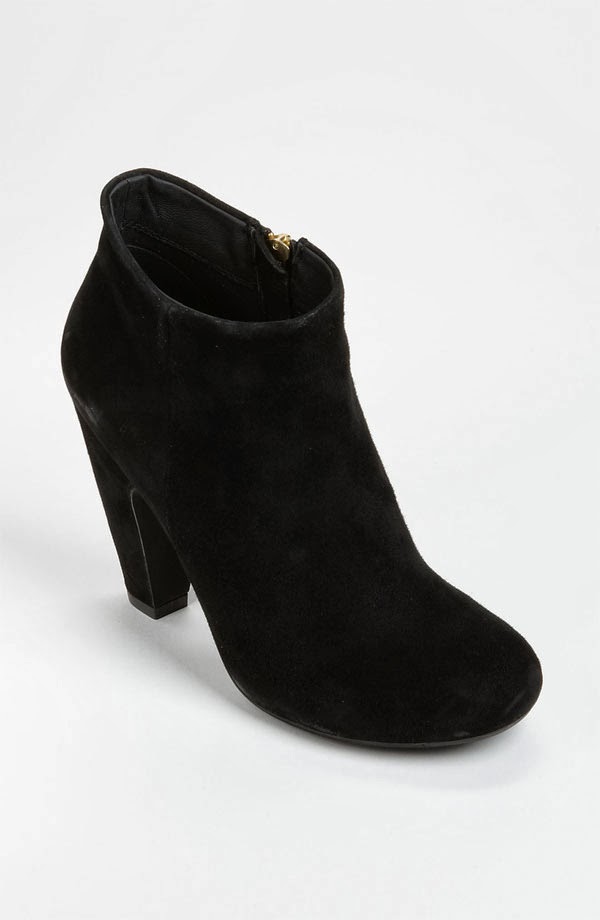
  • Boots come in many different shapes, sizes, and colors, and can be worn with a variety of outfits. You can wear a pair of riding boots with an oversized sweater and leggings for winter just as easily as you can with a lightweight top and skinny jeans in spring! Boots can also complete outfits with shorts and tights, skirts, or dresses. A great pair of boots is a versatile must-have for every season.
Click to see more!

  • Layering is arguably the best way to transition from winter to spring. Cardigans, sweaters, and light jackets can all be worn together or layered with camis or other tops. You can always throw on a scarf as well! This approach works well because you can take off or put on layers as it gets warmer or cooler, which is vital if you live in Indiana!
Click to see more!
  • Jeans are another versatile piece that you can use to transition from winter to spring with ease. They can be worn with practically anything and can be found in virtually every color! They can be cuffed up, tucked into boots, or however else you can think to wear them! Colored denim is especially great for spring as it acts like scarves in that it can brighten up or balance out your outfit.
Click to see more!


We hope you will find a way to make whatever is in your closet this winter work for spring! You can read more about these ideas and others by following any of these links:


Tuesday, January 14, 2014

Trends for Spring 2014

Spring Trends
We may still be sporting winter coats, scarves, and boots, but the runway is geared up and ready for spring! A few trends popped up repeatedly in designers’ collections, and we’ve picked our favorites of those looks. Florals, metallics, and more: read through to see what is predicted to be big this spring, and then tell us what trends you’ll try!
(Click images to see more)

  • Bare Midriffs


Loewe                                                         Mark Fast

Peter Som                                                         Versace


  • Florals


Alberta Ferretti                                          Dries Van Noten

Etro                                                         Stella McCartney

  • Fringe
Altuzarra                                                      Emilio Pucci 

Rodarte                                                         The Row 

  • Metallics
Rachel Zoe                                                     Rochas

Saint Laurent                                                    Versace

  • Pink!
Burberry Prorsum                                           Helmut Lung

Marissa Webb                                              Giorgio Armani

FASHION 101 : Fabric Care

FASHION 101

FABRIC CARE


Polyester, rayon, nylon… You hear these words all the time and see them on the labels of your clothes, but what do they mean? Read here for a basic run-down on what these fabrics are and how you should wash and dry them to keep them in top condition!

**Always make sure to refer to the sewn-in label on garments for specific instructions.

NYLON
Nylon is a man-made fiber that is resilient and versatile. It is light but strong, and is used for a variety of materials, including hosiery, bridal veils, carpets, and tents. Clothing made from this fabric dry quickly and easily return to their original shape after being stretched out.
  • TO WASH: Most nylon pieces can be machine washed in warm water. It is recommended that you put hosiery in a mesh bag when washing to reduce chances of stretching or tearing.
  • TO DRY: Tumble dry on low and use fabric softener or a dryer sheet to reduce static electricity. If your piece needs to be ironed, use a low temperature setting.

RAYON
Rayon is a cellulose fiber made from the purified cellulose of wood pulp. It is considered a semi-synthetic fiber because it is manufactured from naturally occurring materials. The qualities of rayon are similar to that of cotton, but is not quite as sturdy. It loses strength when wet and burns as high temperatures. Rayon is absorbent, soft, silky, and wrinkles easily. Rayon is also prone to stretching when wet and shrinking when washed.
  • TO WASH: Unless labeled that it is machine washable, rayon should be hand-washed in lukewarm water with a light detergent. Never twist or bunch up the garment, as it could be damaged. If you do machine wash it, use warm water and wash it alone or in a mesh bag.
  • TO DRY: Smooth out any wrinkles or shake the garment out before laying it on a flat surface to dry. If hung, use a non-metal hanger to avoid rust spots. When ironing rayon, do so while it is inside-out and damp, using a pressing cloth and a low heat setting.

POLYESTER
Polyester is a strong synthetic material that is used in a variety of items, from clothing to pillow stuffing to seatbelts and finish on some wood products. It is resistant to creasing and is nonabsorbent, though it does hold oil stains. Polyester is often used in blends with other fabrics.
  • TO WASH: Polyester fabrics should be turned inside-out before machine washing on warm with a standard detergent. **Bleach may be too harsh for polyester materials. Instead, soak white pieces in a mixture of one gallon of water and ½ cup of automatic dishwasher detergent overnight to brighten them.
  • TO DRY: Polyester can be machine dried on a low temperature setting. Be careful of over-drying, as this may cause the garment to shrink. A dryer sheet or fabric softener (during wash) will reduce static cling. If ironing, use a moderately warm setting.

SPANDEX
Spandex is a man-made fiber known most for its sturdy elasticity. It is always blended with other fabrics and has many different uses in apparel. Spandex is very resistant to sun damage, washing, oils and perspiration, and heat.
  • TO WASH: Spandex can be hand-washed or machine-washed in lukewarm water with a standard detergent.
  • TO DRY: Machine dry using low heat or line-dry. If ironing is necessary, do so rapidly on a low heat setting and do not leave the iron sitting in one place for too long. 

COTTON
Cotton is a natural fiber that comes from the seed pod of a cotton plant. It is a very common, sturdy fabric that can withstand high temperatures and is very absorbent. It may wrinkle easily.
  • TO WASH: Cotton can easily be machine washed on warm with a standard detergent.
  • TO DRY: A higher heat setting should be used when machine drying cotton. It can also be ironed on a high heat setting.
For more about fabric care, check out these sites:
Fabric Care Symbols. You see them on the tags of all of your clothing, but what do those little symbols mean? Here's a handy chart to help you sort out the proper care of your garments!


Friday, January 10, 2014

Fashion 101 : Dresses


Confused by different terms that people use when they talk about dresses? Here's a breakdown on what some of those terms mean so that you can be in the know! 
Also, find out what cuts and styles can best complement your body type!

EMPIRE WAIST
An empire waist dress is distinguished by a raised waistline. It usually sits below the bust and then the rest of the dress flows out from it.  This cut accentuates the body by pulling attention upwards and allowing a looser fit around the natural waistline.

  • Works well for women with a "rectangle" or "apple" body type.

WRAP DRESS
Wrap dresses do what the name suggests- wrap around your body. These dresses accentuate the waist and draw attention upwards. They help create an hourglass figure by lifting and separating the bust.


  • Works great for women with "pear" or "rectangle" body types.


SWEETHEART NECKLINE
The sweetheart neckline is distinguished by two curves over the bust come down and meet in the center, creating what looks like the top of heart.

  • A sweetheart neckline works nicely with every body type, but may be more difficult for women with fuller busts to wear.


SHIFT DRESS
A shift dress is a usually short dress that lacks definitive shaping. A shift is often sleeveless and may have darts, though, typically, does not feature any other detail.

  • This style works well for women who have an "hourglass" or "rectangle" body type.


CAP SLEEVE
A cap sleeve is a short-sleeve that covers the shoulder. It does not extend down or under the arm. It usually has a tighter fit at the top of the garment. 

  • A cap sleeve works well if you have a "pear" or "rectangle body type, or if your waist is wider than your hips and bust.


BABYDOLL

A babydoll dress has a high waistline which allows the bottom of the dress to flow away from the body. It sometimes features lace or ruffles because of their youthful nature. 

  • This style looks especially great if you have an "apple," "hourglass," "rectangle," or "inverted triangle" body type.


SHIRT DRESS
A shirt dress borrows from the style of a men’s shirt. They often have a collar or buttons down the front to mimic that style. They are usually cut without a seam at the waist and rely on the use of a belt to define the waist because of their loose fit.
  • A shirt dress complements women with a "rectangle, "inverted triangle," "apple," or "hourglass" body type best.


What looks good on me?
Each woman has a unique body that will be outfitted with thousands of pieces of clothing throughout her lifetime. Sometimes, you wear something just because you want to (why not!), but, sometimes, you want to find something that will flatter the figure you have. Here are some tips on what styles will flatter your shape if you are looking to do just that!
  • If your hips are wider than your bust, try wearing halter or wrap dresses which will accentuate your waist to balance the two out.
  • If your bust is wider than your hips, you can try to avoid focusing attention on your upper body by passing on dresses with high necklines and thin straps.
  • If your bust and waist are the same width and your waist is not as defined, empire waist and wrap dresses may give the appearance of curves. 
  • If you have a defined waist and your hips and bust are “balanced,” then try shift dresses or bodycon dresses that will emphasize your curves.
  • If you have a full midsection that is wider than your hips and bust, try an empire waist or babydoll dress to emphasize your top section and create a waistline or a knee-length dress that will highlight your legs.
  • If you have a large bust, narrow hips, and a full midsection, try wearing v-neck dresses that create a longer torso. You can also try babydoll dresses, empire waists, or belting the smallest part of your waist to create a waistline.
Remember, these are all just suggestions! Play with different styles and looks to see what you think you look best in!

Friday, January 3, 2014

Fashion 101 : Women's Clothing Sizes

FASHION 101

SIZING FOR WOMEN

How do I know what to shop for?

     First of all, start off by knowing that there is no standard for women’s sizing in the United States. It is not uncommon for sizes to vary from store to store or from brand to brand. A small in one place may be the same as a medium in another. It is always important to try clothes on or refer to the online sizing guide / description for the perfect fit!

     Clothing for women is usually broken down into three main categories: juniors, women’s, and young contemporary, also considered “misses.” Each uses the “small, medium, large” sizes for tops, but has different sizing for pants.
  • Juniors’ pant sizes are indicated by odd numbers and are cut for younger, less curvy or defined bodies. Clothing is made to be slimmer in the waist, hips, and bust areas.
  • Women’s pant sizes are indicated by even numbers and leave more room for different and more developed body shapes.
  • Young contemporary or misses pant sizes typically use the even number indication and are meant to bridge the gap between juniors and women’s. Misses clothes are cut for more developed bodies.


Hips (in inches)
32
33
34
35
36
37
38
39
Waist (in inches)
22
23
24
25
26
27
28
29
Women’s Denim (EU)
24
25
26
27
28
29
30
31
Juniors
Pants
0
1
3
5
7
9 / 11
11 / 13

Dresses & Tops
XS
S
S
M
M / L
L
XL
Young Contemporary & Misses
Dresses & Tops
XS
S
S
S / M
M
L
L
XL
Women’s
Pants
00
0
2
4
6
8
10
12
Dresses & Tops
XS
S
S
S
M
M
L
L


But what if I’m looking at European sizes?


     European sizing is a little different from US sizing, because they use a standard for clothing sizes. It is called EN 13402 and is based on body dimensions in centimeters (Read more here:  http://www.onlineconversion.com/clothing_en13402_standard.htm). 

     European denim sizes start at 24, which is the equivalent to the US size 00. It increases by 1 to the next size: European size 25 = US 0, European 26 = US 2, etc.